
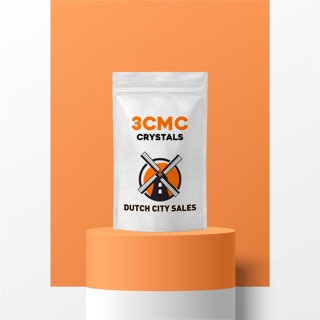
3-CMC Crystals

Original price was: € 30,00.€ 20,00Current price is: € 20,00.
3-Chloromethcathinone
Warning: The law has been changed for this product in the Netherlands. This product has been replaced by 2-MMC which is an alternative for 3-CMC. 2-MMC has the same effects/quality of 3-CMC.
If you order this product, you can receive 2-MMC Crystals.
By ordering this product you agree to receive 2-MMC instead of 3-CMC.
Product Information:
IUPAC-name 1-(3-Chlorophenyl)-2-(methylamino) propan-1-one HCl
Synonyms 3-Chloromethcathinone HCl
Cas number 1607439-32-6
Purity 98.0 % min.
Appearance White to off-white crystalline
3-CMC Crystals (3-Chloromethcathinone), often referred to as “Clopedrone,” is a synthetic stimulant of the cathinone class. In its crystal form, it typically appears as large, transparent, or white “shards” and has gained significant traction on the European and global market as a replacement for its now-banned predecessor, 3-MMC.
- Appearance: It typically appears on the illicit drug market as large white or transparent crystals, crystalline powder, or chunks.
- Classification: It is internationally controlled and listed under Schedule I of the United Nations Convention on Psychotropic Substances
3-CMC Crystals Chemical Profile & Effects
3-CMC is a structural analog of both 3-MMC and 4-MMC (Mephedrone). It primarily functions as a releasing agent for dopamine and serotonin, though its chemical makeup differs by the addition of a chlorine atom.
-
Subjective Effects: Users report a mix of stimulation and mild “empathogenic” effects (increased sociability and warmth), though it is widely consider less euphoric and more “jittery” than 3-MMC.
-
Duration: The “rush” is relatively short, usually lasting 1 to 2 hours, followed by several hours of residual stimulation and inability to sleep.
-
Potency: It is generally consider weaker than 3-MMC by weight, which often leads users to take larger doses—a practice that significantly increases the risk of toxicity.
- Intended Effects: Short-term, dose-dependent surge in energy, alertness, and euphoria.
- Adverse Physical Effects: Severe cardiovascular stress, bruxism (teeth grinding), and involuntary rhythmic movements of the tongue.
- Adverse Psychological Effects: Confusion, memory loss, intense irritability, and compulsive redosing urges.
- Toxicity: It has been linked to numerous non-fatal poisonings and fatal intoxication case reports globally
Be the first to review “3-CMC Crystals”
Related products
Uncategorized

Uncategorized

Uncategorized
Uncategorized
Uncategorized

Uncategorized
Uncategorized
Uncategorized
Reviews
There are no reviews yet.