
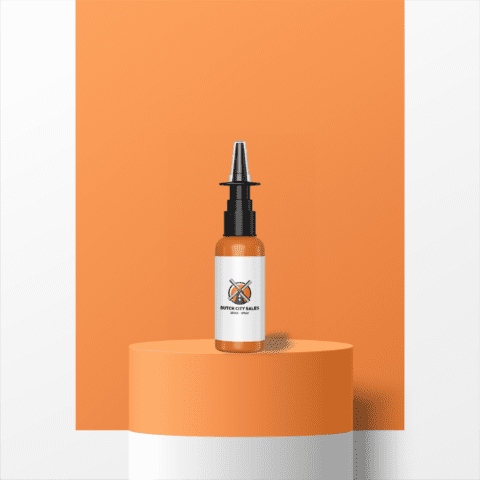

2F-DCK Keta Spray (2-Fluorodeschloroketamine) is a synthetic dissociative anesthetic and a close structural analog of Ketamine. In recent years, it has frequently appeared in the form of a “Keta Spray“ (nasal spray), often marketed as a “legal” or “research chemical” alternative to traditional ketamine.
What is 2F-DCK?
Chemically, 2F-DCK is nearly identical to ketamine, with the only difference being a fluorine atom replacing the chlorine atom in its structure.
Potency: Most users and researchers report that 2F-DCK is roughly equal in potency to ketamine, though some find it slightly more potent when taken orally.
Duration: It generally lasts longer than ketamine. While a ketamine “trip” might peak for 45–60 minutes, 2F-DCK can last 2 to 3 hours, with a longer period of residual “grogginess.”
Effects and Experience of 2F-DCK Keta Spray
As a dissociative, 2F-DCK Keta Spray works by blocking N-methyl-D-aspartate (NMDA) receptors in the brain.
-
Subjective Effects: Feelings of detachment from the body (dissociation), euphoria, distorted perception of time and space, and at high doses, a “hole” (total loss of consciousness and sensory input).
-
Physical Effects: Numbness, loss of motor control (the “k-walk”), dizziness, and slurred speech.
-
Medical Research: Some preliminary research (as of 2024–2026) has explored 2F-DCK for treatment-resistant depression, similar to how Spravato (Esketamine) is used, but it is not yet an approved medical treatment.
- Structural Relationship: It is an analog where the chlorine atom found in traditional ketamine is replaced with a fluorine atom. [1]
- Mechanism: It functions as an NMDA receptor antagonist, which alters neurotransmitter activity and disrupts normal sensory processing in the brain. [1]
- Duration: Anecdotal data and laboratory studies suggest that its metabolic breakdown is slower than ketamine’s, causing its intoxicating effects to last longer
Be the first to review “2F-DCK Keta Spray”
Related products
Uncategorized
Uncategorized
Uncategorized
Uncategorized
Uncategorized
Uncategorized
Uncategorized

Uncategorized
Reviews
There are no reviews yet.